

Partners test integrated robotic systems in full-scale sewer pipes
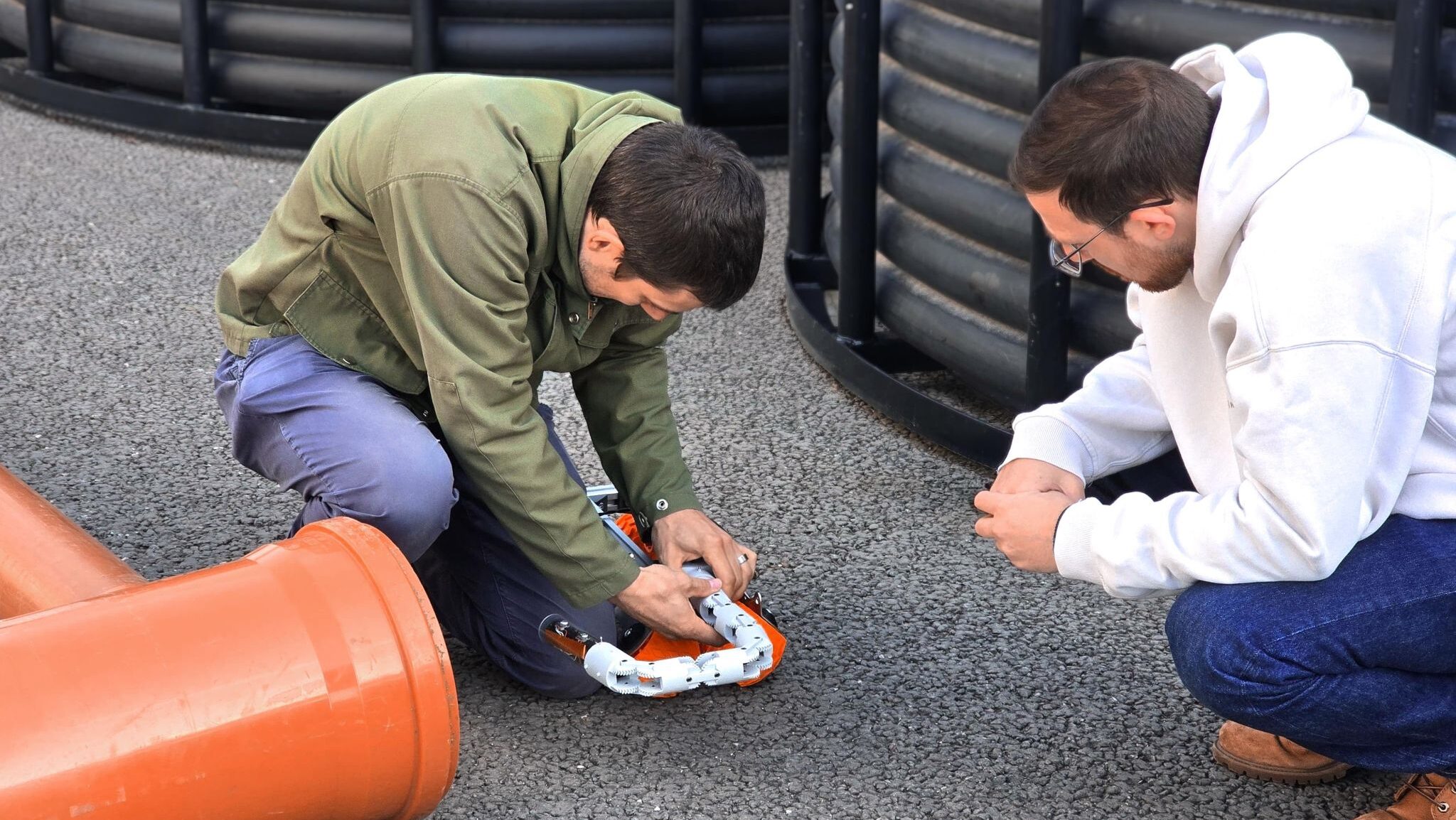
A week of joint experiments at the University of Sheffield brought together PIPEON technologies developed in separate laboratories, enabling their first combined tests in full-scale sewer pipes.
Hosted at ICAIR, the experiments brought PIPEON’s technical partners together to assess how robotic manipulation, locomotion and sensing systems work in combination. The tests provided practical insights into system integration and identified priorities for further development.
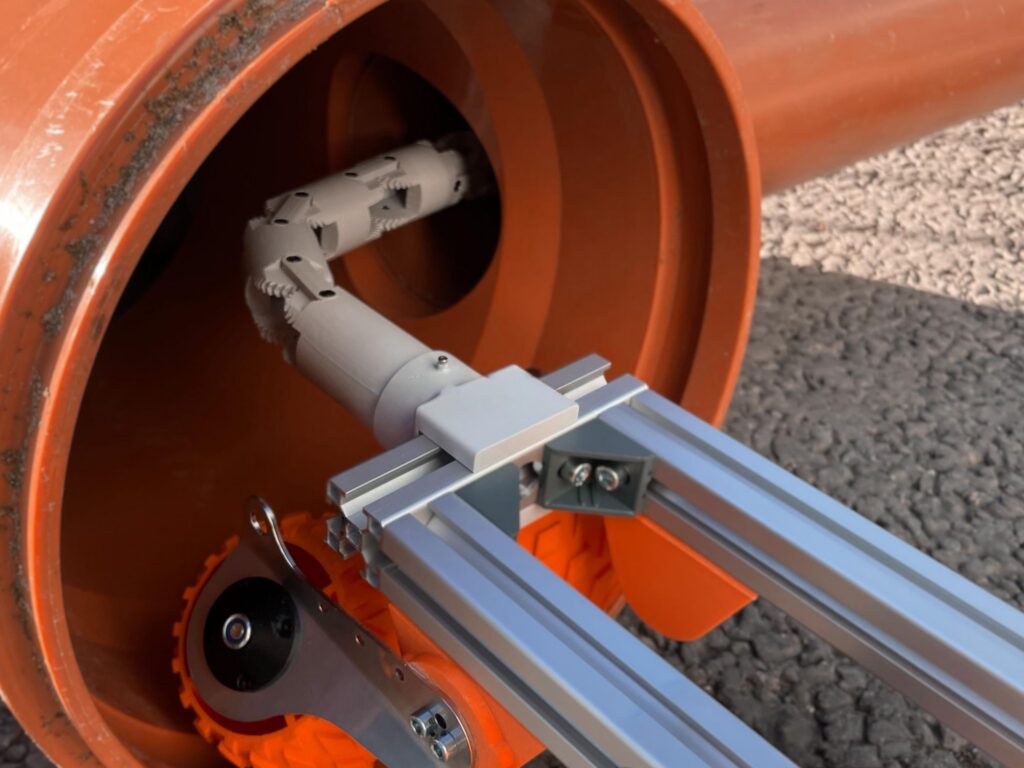
Herobots contributed prototypes of its two robotic arms, Cheliped-1 and Cheliped-2. The team mounted Cheliped-2, designed for inspection and blockage removal, on the locomotion platform developed by TalTech – Tallinn University of Technology, with sensors integrated by Headlight AI.
Testing access, control and sensing
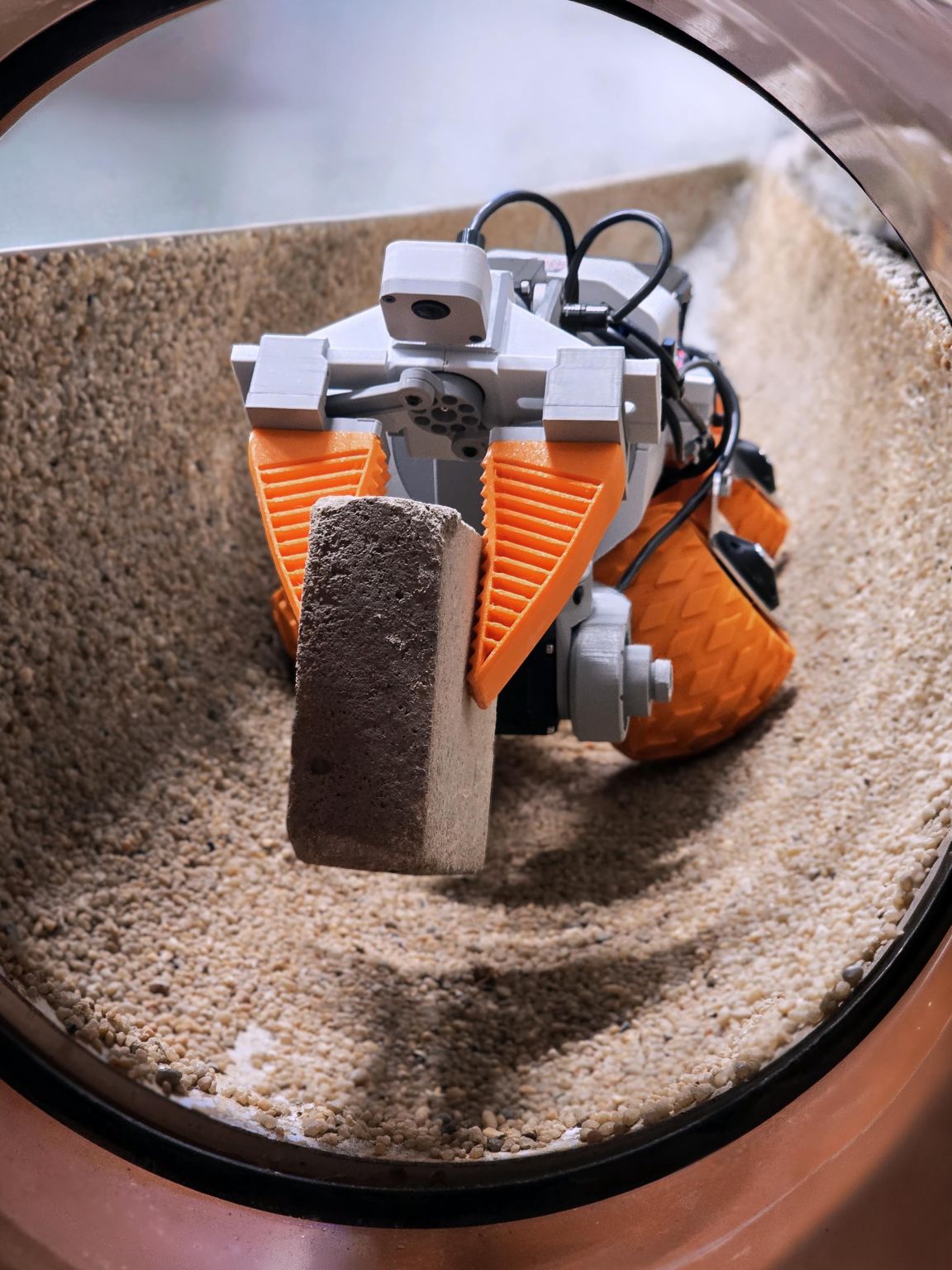
The first integration tests demonstrated simultaneous control of the robotic arm and locomotion platform. Cheliped-2 operated within a 300 mm main pipe, while its gripper worked inside 150 mm lateral branches without its footprint obstructing access.
The team also performed remote grasping using images from the onboard camera, enabling operation without a direct line of sight. Alongside these tests, the depth camera captured detailed point clouds of the lateral branches, providing three-dimensional information about their internal geometry.
Informing the next stage of development
The experiments identified improvements to pursue in gripper orientation, sensor cabling and onboard data handling. These findings will help partners refine the individual components and their integration.
By testing technologies together in a shared environment, the Sheffield experiments marked an important step in the development of PIPEON’s robotic systems for sewer inspection and maintenance.
PIPEON thanks all participating technical partners, including Herobots, TalTech, Headlight AI and the University of Sheffield, for their contributions to a productive week of collaboration.


