

PIPEON Technology Reaches New Milestone with First Live Sewer Inspection in Tallinn
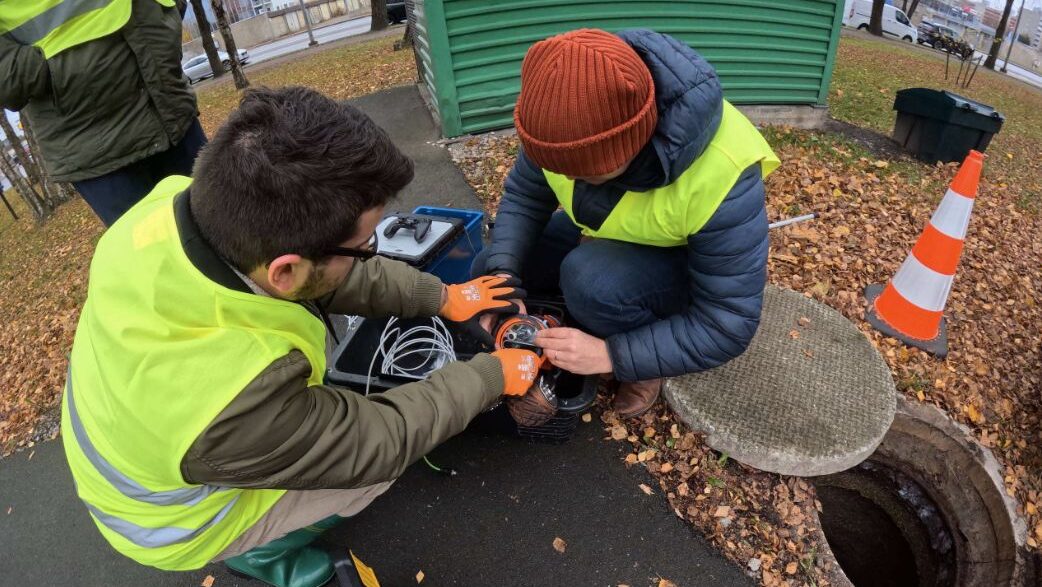
Robotic technology emerging from the EU-funded PIPEON project has reached an important milestone with its first deployment in an operational sewer network in Tallinn, Estonia. The inspection, carried out by Südi Robotics, demonstrated promising results under real wastewater conditions, with performance comparable to conventional inspection equipment.
Following several months of testing in stormwater pipes containing debris, the Südi Robotics team advanced to a more demanding environment: an operational sewer carrying flowing wastewater.
The inspection took place in a DN500 pipe section in Tallinn (the pipe deployment was in DN500, but the one in live sewer was DN300) that had previously been examined by Watercom using a commercial crawler approximately one month earlier. This provided an opportunity to compare the performance of the robotic system against an established inspection method.
Promising results under real operating conditions
The first deployment demonstrated the potential of the technology to deliver reliable information about sewer infrastructure.
The robot’s high-resolution video captured the same defects previously identified in Watercom’s inspection report. Furthermore, the pipe inclination measurements achieved precision comparable to those obtained using the commercial crawler.
The entire operation, including equipment setup, inspection and packing up, was completed in approximately one hour.
Following the inspection, Watercom reviewed and validated the report produced by the team, providing encouraging initial evidence of the technology’s capabilities under real operating conditions.
Advancing robotic innovation for wastewater infrastructure
Südi Robotics is a spin-out from Tallinn University of Technology (TalTech), commercialising robotic technology that emerged from research conducted within the Horizon Europe PIPEON project.
PIPEON is developing advanced robotics, artificial intelligence and sensing technologies to improve the inspection and maintenance of European sewer networks. By enabling more accurate data collection and supporting the early identification of infrastructure defects, the project aims to facilitate a transition from reactive maintenance towards more preventive and predictive approaches.
The Tallinn deployment represents a valuable step in moving robotic inspection technologies beyond controlled testing environments and towards practical applications in operational wastewater networks.
Next steps: Testing across different environments
While the initial results are encouraging, further testing will be essential to assess the system’s performance and reliability under varying operational conditions.
The team plans to carry out additional inspections across different pipe configurations, environmental conditions and seasons, gathering further evidence to support the technology’s development and future applications.
This achievement was made possible through the collaboration of Südi Robotics, Watercom, the PIPEON project and the Centre for Biorobotics at Tallinn University of Technology.


